What makes a small-business website get calls?
A site that loads fast on a phone, says what you do and where, and puts a working call button where a thumb can reach it.
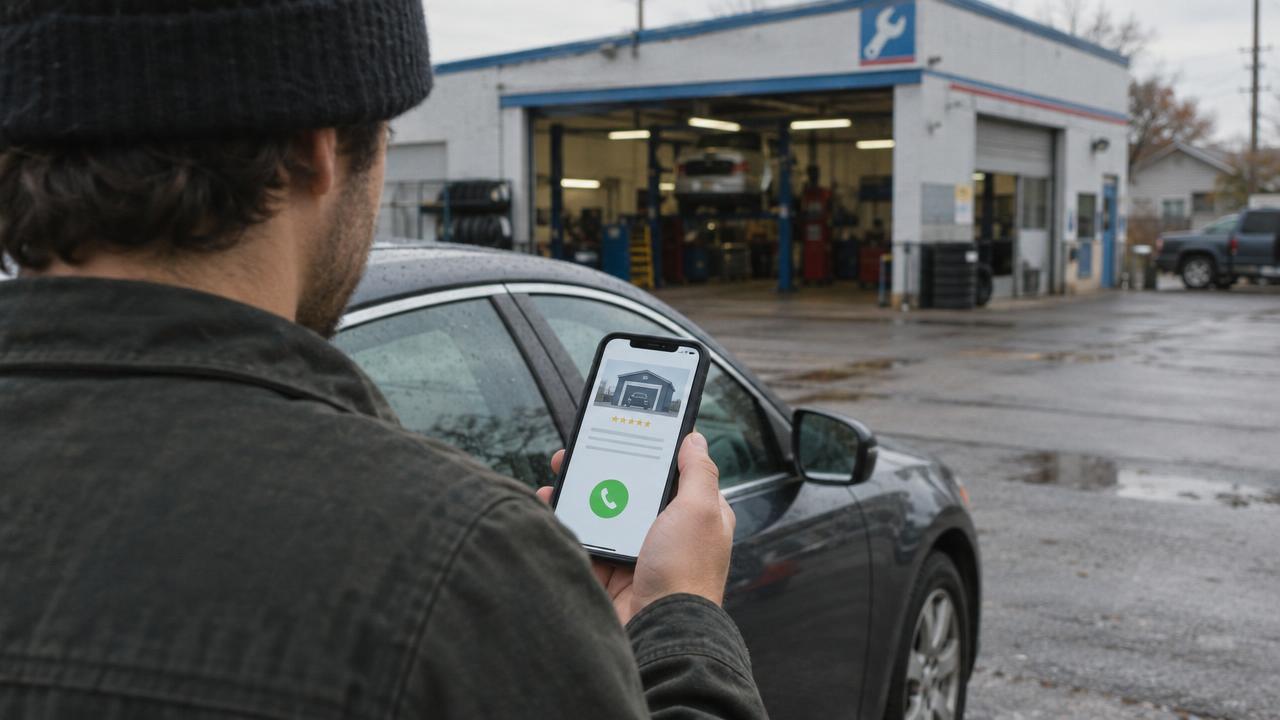
A small-business website gets calls when it loads fast on a phone, says plainly what you do and where, and puts a tap-to-call button in front of the visitor. Google judges and ranks the mobile version of your site, so the phone layout is the one that counts.
Owners often judge a website by how it looks on a desktop monitor. Customers judge it on a phone, usually in a hurry, often standing next to the problem. A site that gets calls is built for that moment.
Why does the mobile version matter most?
Google says it uses the mobile version of a site's content, crawled with the smartphone agent, for indexing and ranking.2 If your phone layout hides your number, cuts content or breaks, that is the version Google reads. Open your own site on your phone today and try to call yourself in under five seconds.
Phones are also what people have in their hands. Google reported in 2016 that 76% of people who search on a smartphone for something nearby visit a business within a day.4 That is a 2016 survey, so use it as context for intent, not a current rate. The takeaway is that someone searching for a business near them often means to act soon.
How fast does a site need to be?
Google publishes its own thresholds for a good experience, measured at the 75th percentile of page loads:1
- The main content should appear within 2.5 seconds of the page starting to load (Largest Contentful Paint).
- The page should respond to taps in 200 milliseconds or less (Interaction to Next Paint).
- The layout should not jump around, with a Cumulative Layout Shift of 0.1 or less.
The practical advice for a shop: use compressed photos at the size they are displayed, skip autoplaying video and heavy sliders, and avoid stacking plugins. A phone on a weak signal in a parking lot is the test.
What should the top of the page say?
Three things, in plain words, before anyone scrolls: what you do, where you do it, and how to reach you. "Heating and air repair in Marietta, call now" does more than a slogan. A visitor should not have to guess whether you serve their area.
Why does a tap-to-call button matter?
Because calling is what many customers of service businesses want to do. A button that opens the phone dialer with your number ready removes a step. Google's call ads work this way: when someone clicks the call button in the ad, it places a call to you from their device.3 Do the same on your own site. Put the button at the top, keep it visible as the visitor scrolls, and repeat it at the bottom.
Use a real phone number as a link, not a picture of a number. A picture cannot be tapped or read aloud.
What else builds enough trust to call?
- Real photos of your shop, your team and your work.
- Reviews shown on the page, ideally the same ones on your Google profile.
- Your hours, address or service area, and license number where one applies.
- Prices or price ranges when you can give them, and what happens after someone calls.
- A short form or text option for people who do not want to talk.
What happens when the call comes in?
This is where good sites fail. The page did its job and the phone rang at 7:40 on a Saturday evening. If nobody picks up, the visitor goes back to the search results and calls the next name. A website that earns calls needs a phone that gets answered.
How do you know the site is working?
Count calls, not visits. Track taps on the call button and the calls that follow, and ask each new customer how they found you. A site with modest traffic and steady calls is doing its job. One with big traffic and no calls is not.
What should you do this week?
- Load your site on a phone over mobile data and time it.
- Tap your phone number. Does it dial?
- Read the top of the page. Could a stranger tell what you do and where?
- Call your own number after hours and see what a customer hears.
B&G Solutions builds websites for small businesses with fast mobile pages and tap-to-call placement, and answers the phone in the business's name, in English and Spanish, so the call the site earns gets booked.
Common questions
Does my website need to work on phones?
Yes. Google says it uses the mobile version of a site's content for indexing and ranking, so your phone layout is the one that counts.
How fast should a small-business website load?
Google's guidance for a good experience is main content within 2.5 seconds, responses to taps in 200 milliseconds or less, and a layout shift score of 0.1 or less, measured at the 75th percentile of page loads.
Where should the phone number go?
At the top of every page, as a tap-to-call link, and again near the bottom. Use text, not an image of a number.
What matters more, traffic or calls?
Calls. Track taps on the call button and ask new customers how they found you.
Do I still need a website if I have a Google Business Profile?
Most owners benefit from both. The profile is what Google shows in search and Maps. The website carries the detail and gives visitors a place to learn more before they call.
Sources
- Google web.dev, Web Vitals (2026)
- Google Search Central, Mobile-first indexing best practices (2026)
- Google Ads Help, About call ads (2026)
- Think with Google, How Mobile Search Connects Consumers to Stores (2016)